

Industrial-grade 6H-N Silicon Carbide (SiC) substrates are high-quality single-crystal wafers engineered for high-temperature, UV optoelectronic, y precision industrial electronic applications.
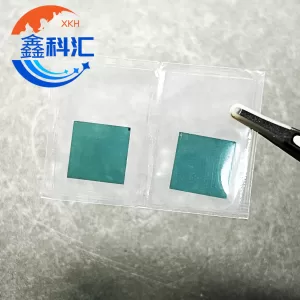
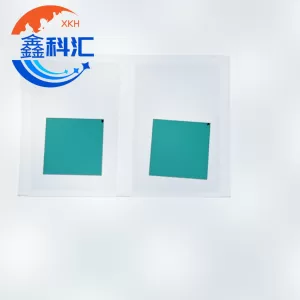
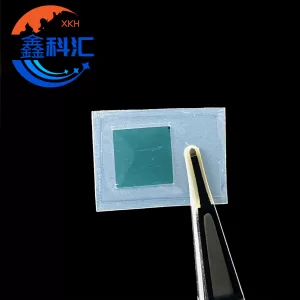
Compared with the widely used 4H SiC polytype, 6H SiC features excellent thermal stability, mechanical hardness, and cost advantages, making it ideal for UV LEDs, high-temperature sensors, aerospace electronics, and industrial-grade power components.
6H Hexagonal Crystal Structure
Offers dimensional stability, mechanical strength, and reliable performance under high thermal stress.
N-Type Conductivity
Suitable for high-temperature electronics, UV devices, and specialized power circuits.
High Thermal Conductivity (≈390–450 W/m·K)
Ensures efficient heat removal and enhances device lifetime.
Superior Mechanical & Chemical Durability
High hardness, corrosion resistance, and robustness during processing.
Epi-Ready Surface Options
CMP, DSP, and SSP finishes available for epitaxial growth and R&D.
Customizable Sizes & Thickness
Standard diameters and square formats available for flexible integration.
High-temperature semiconductor devices and industrial sensors
UV LEDs, UV detectors, and optoelectronic modules
Aerospace and automotive electronics exposed to extreme conditions
Compact, robust industrial power devices
R&D and pilot-scale production in wide-bandgap semiconductors
| Parameter | Specification |
|---|---|
| Material | Single-Crystal 6H-N SiC |
| Crystal Structure | Hexagonal (6H) |
| Diameter / Size | 25 mm, 50 mm, 100 mm, 150 mm, 200 mm, 300 mm; square or custom |
| Thickness | 350–1,000 µm (customizable) |
| Surface Finish | CMP epi-ready, DSP, SSP |
| Total Thickness Variation (TTV) | ≤5 µm typical |
| Bow / Warp | ≤40 µm (6″ typical) |
| Micropipe Density | <0.1 cm⁻² (premium <0.01 cm⁻²) |
| Dislocation Density | <10⁴ cm⁻² |
| Conductivity | N-type (conductive), SI optional |
| Epi-Ready | Yes — supports epitaxial growth |
Enhanced electrode alignment for UV LEDs y high-temperature sensors
Improved device integration for industrial control circuits
Semi-insulating option enables RF and microwave low-loss performance
High-purity SiC powder synthesis
Seed attachment and 6H polytype configuration
Sublimation crystal growth at 2300–2500°C
Diamond wire sawing into wafers
CMP or diamond polishing to achieve epi-ready surfaces
Optical inspection and CoA certification
High-temperature and high-voltage electronics
UV optoelectronic modules
Aerospace and defense systems
Industrial power solutions for harsh environments
Laboratory research and pilot device development
1. What differentiates 6H-N SiC from 4H SiC?
6H-N SiC has slightly lower electron mobility but superior thermal stability and cost advantages for UV and high-temperature applications, while 4H SiC is optimized for fast, high-efficiency power devices.
2. Can 6H-N SiC operate under extreme temperatures?
Yes. It maintains structural and electrical stability at very high temperatures.
3. Are sizes and finishes customizable?
Absolutely — diameter, thickness, surface finish, and conductivity are fully customizable for R&D or mass production.
4. Which industries commonly use 6H-N SiC substrates?
UV optoelectronics, high-temperature sensors, aerospace, automotive electronics, and industrial-grade power modules.